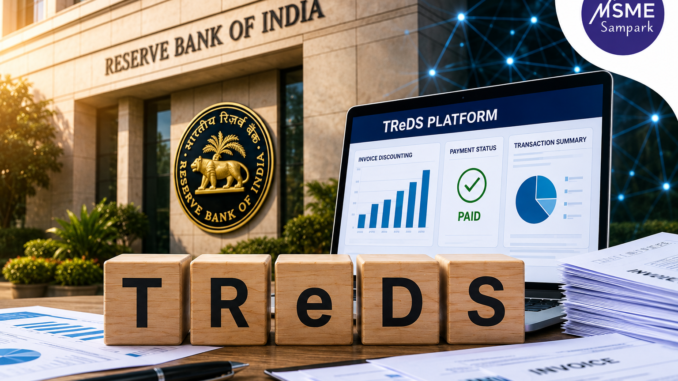
Getting Paid Faster Just Got Easier — RBI Is Fixing the TReDS Problem Small Businesses Couldn’t Ignore April 30, 2026 MSME Sampark Msme News 0 There is a platform in India that was specifically designed to solve one of the most damaging problems small businesses face — the 60, 90, sometimes 120-day wait to get paid after delivering goods or services to a large buyer. The platform is called TReDS — the Trade Receivables Discounting System. And for years, it has been an excellent solution that most MSMEs never actually used. That is about to change. Understanding the Problem TReDS Was Built to Solve When a small supplier delivers goods to a large corporation or government entity, payment rarely comes immediately. Standard industry practice in India often means waiting 45 to 90 days — and in reality, many MSMEs report waiting far longer. During that waiting period, the small business still has to pay its workers, buy more raw materials, and manage its own suppliers. The result is a working capital crisis that has nothing to do with the business being unprofitable. The money is owed. It just hasn’t arrived. TReDS was created to break this cycle. A small supplier uploads their invoice to the platform. Financial institutions — banks and NBFCs — bid to finance that invoice immediately, at a small discount. The supplier gets cash now. The large buyer pays the financial institution later, on the original due date. Everyone wins. So Why Weren’t More MSMEs Using It? The onboarding process was the barrier. Getting registered on TReDS required documentation, coordination between multiple parties, and a process that many small business owners found too complicated and time-consuming to navigate, especially when they were already stretched thin running their businesses. The result was a well-designed platform operating well below its potential. What RBI Is Proposing The Reserve Bank of India’s proposal is targeted directly at this friction. Simplified onboarding norms mean fewer steps, less paperwork, and a faster path from registration to actually being able to use the platform. The central bank’s intervention signals something important — the regulator has identified TReDS as a critical tool for MSME liquidity and is now actively removing the barriers to its adoption. What Changes for Small Businesses If you are a small supplier to any large buyer — whether a private corporation, a PSU, or a government entity — TReDS in its simplified form could meaningfully improve your cash flow situation. Instead of waiting three months for payment, you could potentially access funds within 24 to 48 hours of uploading an invoice. For businesses running on tight margins, that difference is not incremental. It is existential. Watch for RBI’s final guidelines on the simplified norms. When they arrive, act on them quickly. Popular Articles Msme News MSME Pre-Pack Process Sees Limited Effectiveness, Says IBBI Report; Suggests Steps to Boost Adoption Msme News CBIC Extends Export Benefits to Courier Shipments to Boost E-Commerce Msme News Digital Sampark Hosts Hospitality Summit 2025 with Support from MSME Sampark Msme News Foxconn, Dixon, Zetwerk Eye Big Gains from India’s PLI Scheme for Electronics Msme News The Government Just Approved Another Lifeline for MSMEs — Here’s Everything You Need to Know About ECLGS 5.0 Msme News FM Nirmala Sitharaman Announces GST Reduction, A Major Relief for MSMEs Msme News Govt launches 100cr Mutual Guarantee Scheme for MSMEs Msme News MSME Delayed Payments: Only 20% of Complaints Resolved, Government Data Reveals Msme News 3,500 Bengal MSME Traders Tap Into Global Markets Through Amazon Msme News MSME & Startup Summit 2026: What Came Out of It and What Didn’t







Be the first to comment