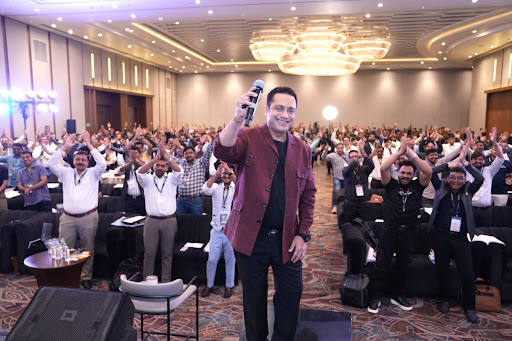
Lack of Structured Business Learning Holding Back MSME Growth, Says Dr. Vivek Bindra March 18, 2026 MSME Sampark Msme News 0 New Delhi (India), March 17, 2026: Amid a growing shift among entrepreneurs toward practical, execution-led learning, the demand for structured business education among India’s MSMEs is steadily rising. Addressing this emerging need, over 250 entrepreneurs and business owners from across the country gathered in Delhi from March 14 to March 16, 2026, for a three-day leadership program focused on strengthening business systems, leadership capabilities, and growth strategies. The initiative, organized by Bada Business Pvt. Ltd., witnessed participation from a diverse cross-section of India’s MSME ecosystem, spanning various industries and enterprise sizes. Participant Overview Enterprise Size Distribution: 39% Micro Enterprises 24% Small Businesses 37% Medium-Sized Enterprises Industry Representation: 33% Services Sector 26% Manufacturing 14% Retail Businesses 8% Distributors 8% Trading Companies 3% Dealership Businesses Entrepreneurs traveled from regions including Delhi-NCR, Uttar Pradesh, Gujarat, Rajasthan, and several other states, reflecting the growing appetite for structured learning platforms that address real-world business challenges. Key Insights by Dr. Vivek Bindra Addressing the participants, Dr. Vivek Bindra, Founder and CEO of Bada Business Pvt. Ltd., emphasized that while India has strong entrepreneurial energy, many businesses struggle to scale due to the lack of structured systems. “India has millions of hardworking entrepreneurs with strong ideas and products. However, many businesses get stagnant because they do not build structured systems around sales, leadership, and operations. Once entrepreneurs adopt clear frameworks and processes, scaling becomes far more achievable and sustainable.” MSME Sector: A Key Economic Pillar India’s MSME sector contributes nearly 48% to the country’s GDP and employs over 350 million people, making it one of the most critical drivers of economic growth. However, many businesses continue to face scaling challenges due to gaps in: Business strategy Operational systems Leadership development Program Highlights The leadership program focused on: Strengthening business fundamentals Enhancing marketing strategies Building leadership capabilities Improving operational efficiency Implementing structured business frameworks Since its inception, the initiative has engaged over 4,900 entrepreneurs across India, highlighting the increasing demand for mentorship-driven learning and practical business education. Real-World Business Learning A key highlight of the program was the sharing of real-world success stories by entrepreneurs who have scaled their businesses using structured systems. Leaders from brands like UBON and Ajmera Sarees shared insights on: Sales optimization Branding strategies Organizational leadership These sessions provided practical solutions to common MSME challenges such as: Market competition Operational inefficiencies Inconsistent revenue growth Brand positioning Networking & Collaboration Opportunities Beyond learning sessions, the program served as a powerful networking platform, enabling entrepreneurs to: Exchange ideas Discuss business challenges Explore collaborations across industries Conclusion As India moves toward becoming a $5 trillion economy, strengthening the MSME sector will remain critical for driving employment, innovation, and regional growth. The strong participation in this program reflects a clear shift among entrepreneurs toward structured learning, mentorship, and scalable business frameworks, paving the way for more resilient and growth-oriented enterprises. FinancePopular Articles Msme News Prospects Brightening for MSMEs in ITeS, Shows CRISIL SME Tracker Msme News Covid Period Credit Guarantee Scheme Helped MSMEs Achieve Higher Net Profit Margins: RBI Study Msme News Credit Guarantee Fund Trust for Micro and Small Enterprises (CGTMSE) Msme News “India Reduces MSME Payment Delays to ₹7.34 Lakh Crore, But Issues Still Persist” : Report Msme News 3,500 Bengal MSME Traders Tap Into Global Markets Through Amazon Msme News 53% of Citizens Face Financial Scams in Last 5 Years, MSME Ministry Issues Urgent Warning Msme News IPR Scheme Under MSME Innovation Initiative Msme News India and UK Sign Comprehensive Economic and Trade Agreement (CETA) Msme News Why Falling Prices Made India’s Growth Look Faster Msme News MSME Bank Credit Jumps 14% in Priority Lending in August: RBI Data
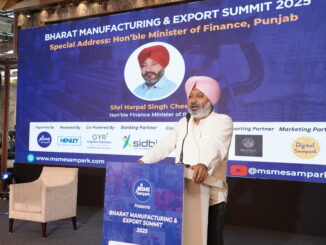
Msme News ₹1 Lakh Crore Industrial Investment, ₹180 Crore Incentives: Punjab Driving MSME Growth; Finance Minister Harpal Singh Cheema at Bharat Manufacturing & Export Summit – Ludhiana June 22, 2025 MSME Sampark Msme News 0 Ludhiana, Punjab: At the MSME Bharat Manufacturing and Export Summit held on June 21st at Radisson Blu, Ludhiana, Punjab’s Finance Minister, Shri Harpal Singh Cheema, addressed a gathering of entrepreneurs, industrialists, and MSME stakeholders. His […]
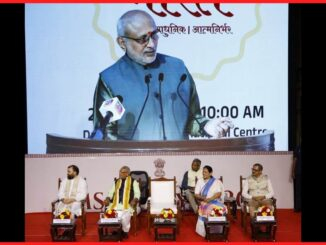
MSME Digital I Was an Entrepreneur Too”: VP Radhakrishnan’s Powerful Message to India’s MSME Community June 28, 2026 MSME Sampark MSME Digital, Msme News 0 At a gathering of policymakers, industry leaders, and small business owners at Dr. Ambedkar International Centre in New Delhi, Vice President of India Shri C. P. Radhakrishnan did something most senior government officials don’t do […]
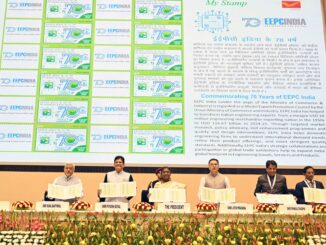
Msme News EEPC India’s Platinum Jubilee: President Murmu Highlights MSMEs’ Role in Building Innovation Economy September 8, 2025 Rahul Singh Msme News 0 New Delhi, Sep 08 (UNI): President Droupadi Murmu graced the Platinum Jubilee Celebrations of the Engineering Export Promotion Council (EEPC) India in New Delhi, emphasizing the pivotal role of trade, innovation, and MSMEs in strengthening […]








Be the first to comment